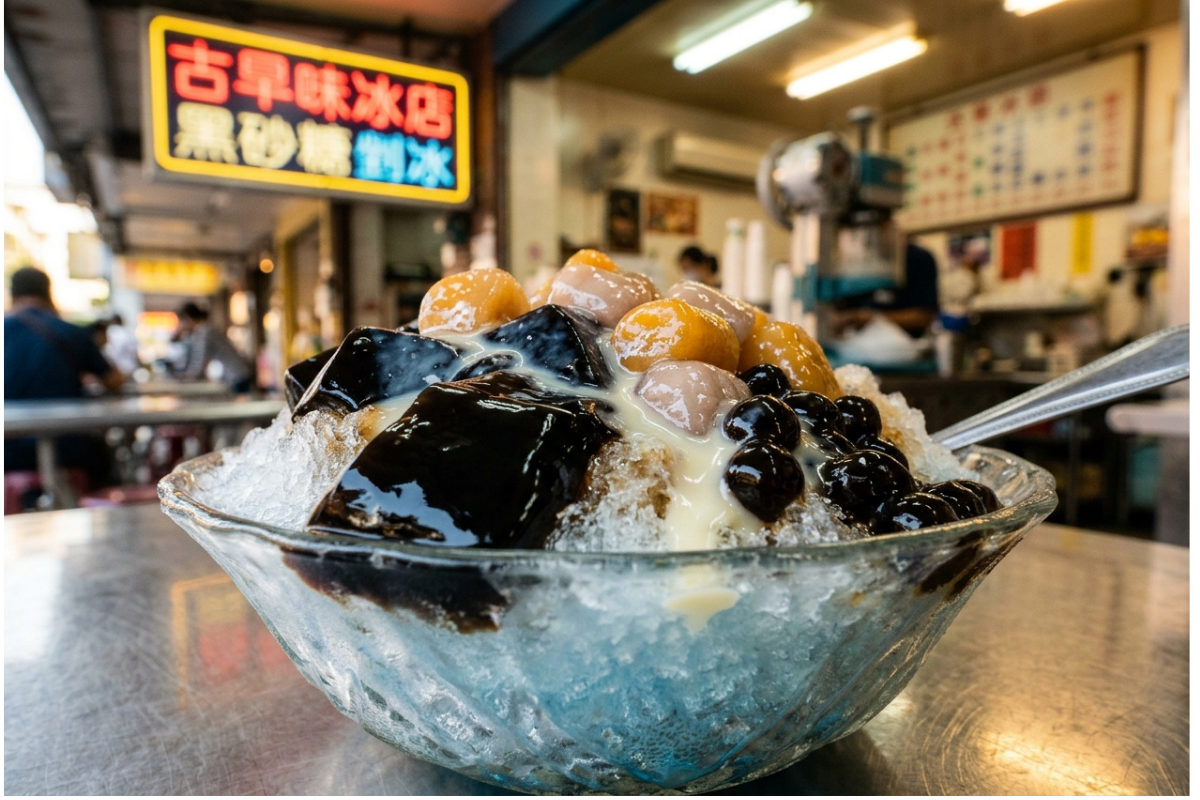
Today, I introduced a Japanese friend to grass jelly (仙草).
This dark, almost black dessert is especially popular during the summer in Taiwan. Traditionally, it has also been associated with cooling down the body and relieving summer heat.
Grass jelly often appears in programs and websites introducing Taiwanese shaved ice and desserts. But while many people have eaten it, fewer know how this refreshing dessert is actually made.
How Is Grass Jelly Made?
Grass jelly actually begins with a plant.
In recent years, with more food and agricultural education in Taiwan, people have become more familiar with what the actual plant looks like.
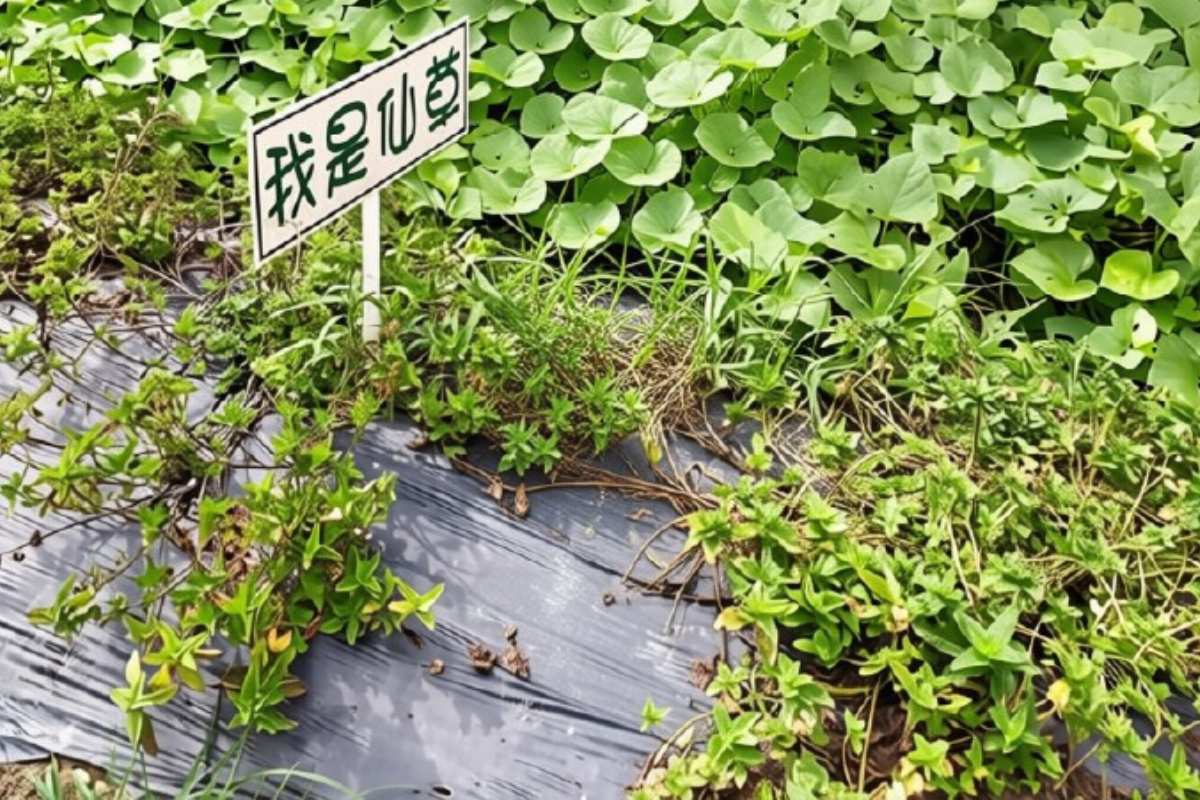
Fresh grass jelly plants. It is hard to imagine that these green plants will eventually become black grass jelly.
But in my childhood memories, grass jelly meant something quite different.
I remember small trucks loaded with stacks of dried grass jelly plants driving through the neighborhood, with a recorded announcement playing through a loudspeaker in Taiwanese:
「仙草乾~買仙草乾~」
“Dried grass jelly herb—dried grass jelly herb for sale!”
It wasn’t until I was an adult, while teaching my own children about food and plants, that I finally saw fresh grass jelly plants growing in the soil with my own eyes.
In Taiwan, the stems and leaves of the grass jelly plant are harvested, washed, dried in the sun, and then simmered over a wood fire for several hours. It’s quite a labor-intensive process.
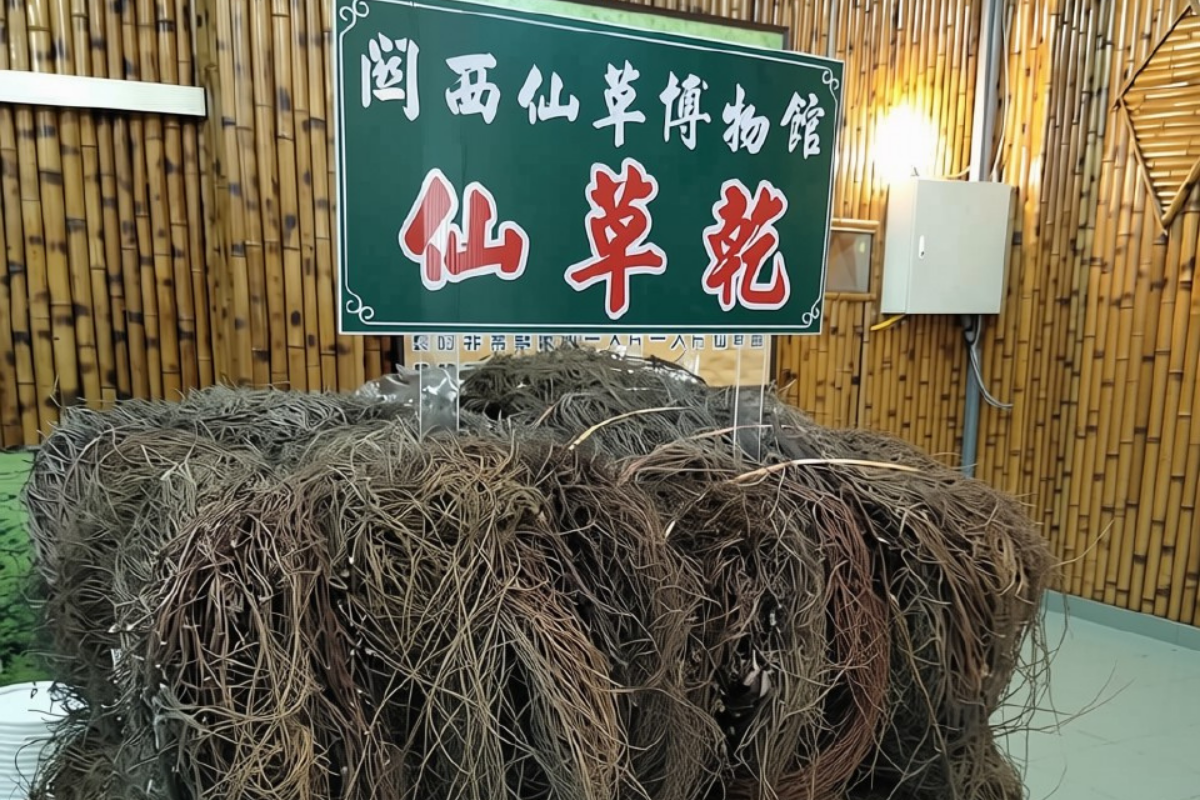
Sun-dried grass jelly herb. Traditionally, it must be simmered for a long time to produce the dark grass jelly liquid.
Once the grass jelly tea is ready, a thickening or setting agent can be added to turn it into the familiar grass jelly dessert.
How Do People in Taiwan Eat Grass Jelly?
During Taiwan’s hot summers, grass jelly tea is a familiar cooling drink.
The brewed liquid can be enjoyed as a drink or made into grass jelly.
When served as a dessert, it’s often eaten with syrup or honey, or paired with toppings such as taro balls, tapioca pearls, and fresh milk.
Different combinations create all kinds of grass jelly desserts.
Grass Jelly in My Childhood Memories
For me, grass jelly isn’t just a summer dessert. It’s also a food that feels very Taiwanese.
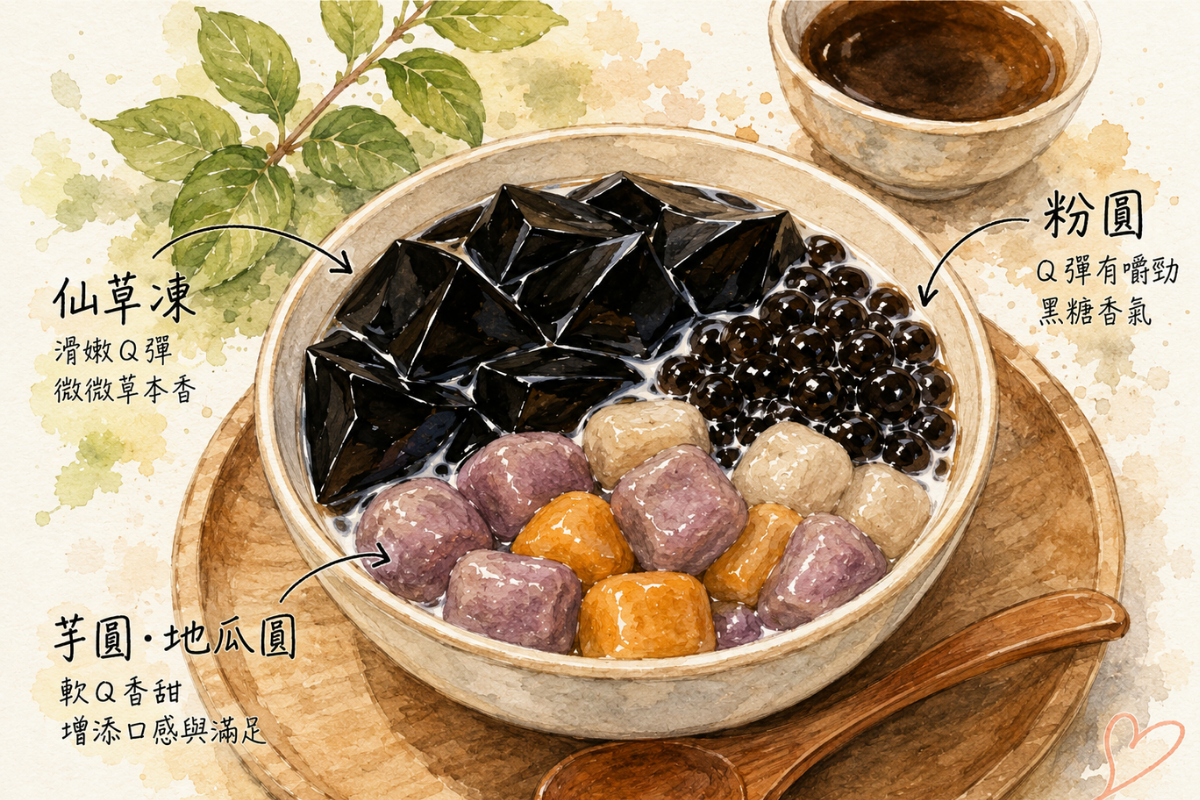
Grass jelly can be served with tapioca pearls, taro balls, and sweet potato balls—a popular summer dessert in Taiwan.
When I was little, I remember watching my grandmother place a piece of grass jelly in the palm of her hand and slice it into small pieces, one cut at a time. Somehow, just watching her do that made me feel very satisfied.
Maybe it’s these seemingly ordinary tastes and little moments that turn food into more than just food.
They become part of our memories.
It’s been hot lately. Maybe it’s time for a bowl of grass jelly!
P.S. In this article, I use “grass jelly” specifically for 仙草凍, the prepared jelly, to distinguish it from the fresh grass jelly plant. But in everyday conversation in Taiwan, when people say 仙草, they usually mean the grass jelly dessert. After all, you don’t normally go to the market to buy a fresh grass jelly plant!
Chinese Vocabulary
If you’re learning Chinese, here are a few useful words from this story.
| Chinese | Pinyin | English |
|---|---|---|
| 仙草 | xiāncǎo | grass jelly / grass jelly herb |
| 仙草茶 | xiāncǎo chá | grass jelly herbal tea |
| 仙草凍 | xiāncǎo dòng | grass jelly |
| 仙草乾 | xiāncǎo gān | dried grass jelly herb |
| 曬乾 | shài gān | to dry in the sun |
| 消暑 | xiāoshǔ | to relieve the summer heat |
| 配料 | pèiliào | toppings |
| 芋圓 | yùyuán | taro balls |
| 粉圓 | fěnyuán | tapioca pearls |