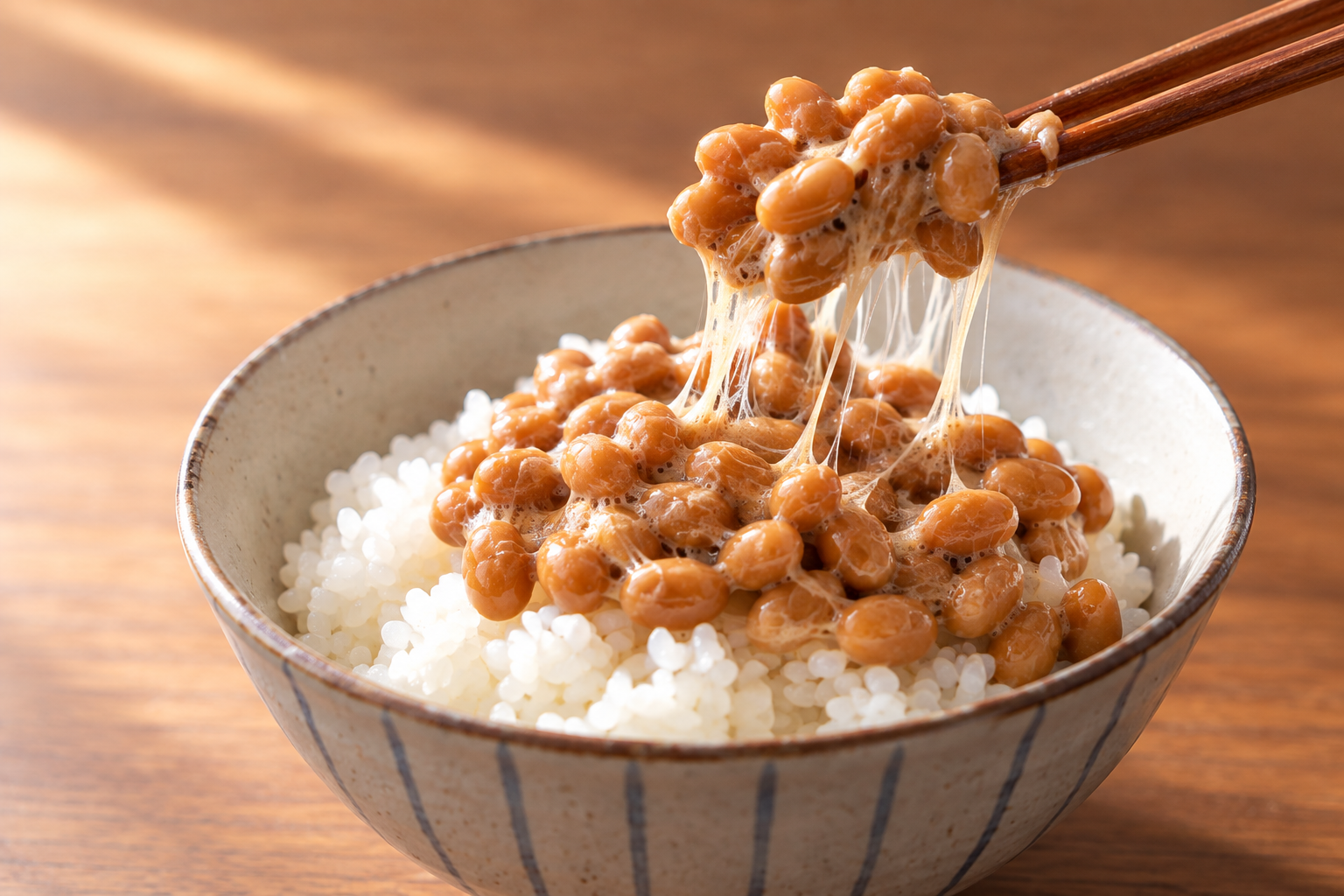
Recently, I started taking classes on Native Camp to give myself more chances to speak Japanese.
I actually first came across the platform more than two years ago. While chatting with someone from Japan online, I happened to learn that his company paid for its employees to practice English on Native Camp. We later used the platform’s ready-made lessons for our language exchanges and kept that going for a while.
Afterward, I also had my children try taking classes. But at the time, there weren’t as many Japanese learning materials as English ones, so we eventually stopped using it.
When I opened Native Camp again recently, I found that a lot had changed in those two-plus years.
This time, I came back to work on my own spoken Japanese. While chatting with different Japanese teachers today, I unexpectedly discovered a little secret about natto, Japanese fermented soybeans.
My first taste of natto
I first heard about natto from a Japanese-language professor. When he was studying in Japan, he ate a bowl of rice with natto for breakfast every day. If the cafeteria had no natto that morning, he would turn around and leave without another word.
A dish with that kind of hold on someone certainly caught my interest.
But when I tried it for the first time, its pungent smell really took me aback.
Later, I read many reports and learned that natto was a nutritious food. As the soybeans ferment with natto bacteria, some of their protein breaks down, and new nutrients and active compounds are produced along the way.
One nutrient that gets a lot of attention is vitamin K2. Natto is particularly rich in vitamin K2, especially MK-7.
Natto also contains an enzyme called nattokinase, which has attracted considerable research interest for its fibrin-degrading activity.
After reading so much about natto’s nutritional value, I decided to give it another try.
Once, twice—and little by little, I got used to it.
Later, when I offered it to my children, I discovered that its distinctive smell didn’t bother them at all. They even competed for it!

▲ The children weren’t put off by natto’s distinctive smell at all—they even competed for it.
And so I began buying natto every week.
In Taiwan, natto turns out to be a frozen food
Quite a few of the packaged natto products sold in Taiwan are imported from Japan.
I know Taiwan also produces its own natto. In fact, while looking into it, I discovered that businesses here had already been making it more than twenty years ago. But I haven’t seen it in the supermarkets where I usually shop. What I buy most often is Japanese imported natto bundled in packs of three.
And they have one very noticeable thing in common—
They’re all in the freezer.
Yes! As far as I was concerned, natto had always been a “frozen food.”
When I looked it up later, I found that I hadn’t imagined this. Okame(おかめ納豆), the brand I often buy, belongs to Japan’s Takano Foods. Takano Foods Taiwan’s official product information clearly states that the products are made in Japan and imported into Taiwan frozen. Its official natto storage instructions also recommend keeping them frozen after purchase and moving them to the refrigerator the day before eating to thaw naturally.
At today’s prices, a three-pack works out to roughly NT$35–40 per container. Back then, I thought about how much it would add up to if the whole family ate it every day.
So I started looking into a question: could I make natto myself?
My homemade natto was a success!
In 2017, I found a complete recipe online.
Following the recipe, I bought natto starter culture at a grocery store, cooked soybeans in a pressure cooker at home, and added the culture to let them ferment.
To my surprise, my very first attempt produced a whole big pot of natto!
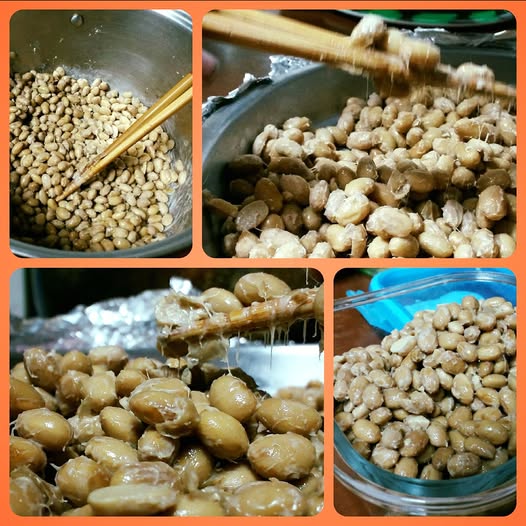
▲ My first attempt at homemade natto in 2017—I hadn’t expected it to work on the very first try.
But my homemade natto smelled stronger than the store-bought kind. The soybeans I had bought were also rather large, so the texture wasn’t as nice as Japanese small-bean natto. There were no little sauce packets like the ones that come with store-bought natto, and I also had to figure out how to store it afterward.
So, although the experiment worked, I didn’t keep making it.
Wait—natto in Japan isn’t frozen?
While talking about natto with Japanese teachers on Native Camp today, I learned something I had never noticed before:
The natto usually sold in Japanese supermarkets is refrigerated!
That was completely different from my experience buying natto in Taiwan.
According to Takano Foods Japan’s storage instructions, natto generally needs to be refrigerated at or below 10°C. The natto bacteria are still alive, so if the storage temperature rises, fermentation may continue, changing the smell and quality.
Of course, natto can also be frozen. It’s just that in Japan, it is generally sold refrigerated.
Then it finally clicked—
No wonder the natto was cold on top of my steaming rice when I ate natto rice at Yoshinoya in Japan!
Since the natto we bought in Taiwan was always frozen, our family had long been in the habit of briefly warming the packaged natto in the microwave before eating it.
Later, after checking Takano Foods Taiwan’s official instructions, I learned that frozen natto should be moved to the refrigerator the day before eating to thaw naturally. There was even a specific reminder: don’t use a microwave to thaw it quickly, as this may affect its quality and texture.
We’d been eating it the wrong way all this time!
So, “natto isn’t a frozen food to begin with!” And what surprised me even more was that we had been thawing it in the microwave for years. Only today did I learn that we’d been getting that part wrong, too.