On the morning of the last day of August, I attended a local gathering and advanced training course for disaster preparedness volunteers.
We practiced wound packing to control bleeding and techniques for moving injured people. Trying these things myself reminded me that, in a disaster, simply knowing what to do is often not enough. You need hands-on practice so your body remembers and you gradually become more confident with the skills.
After the course, I picked up a lunchbox.
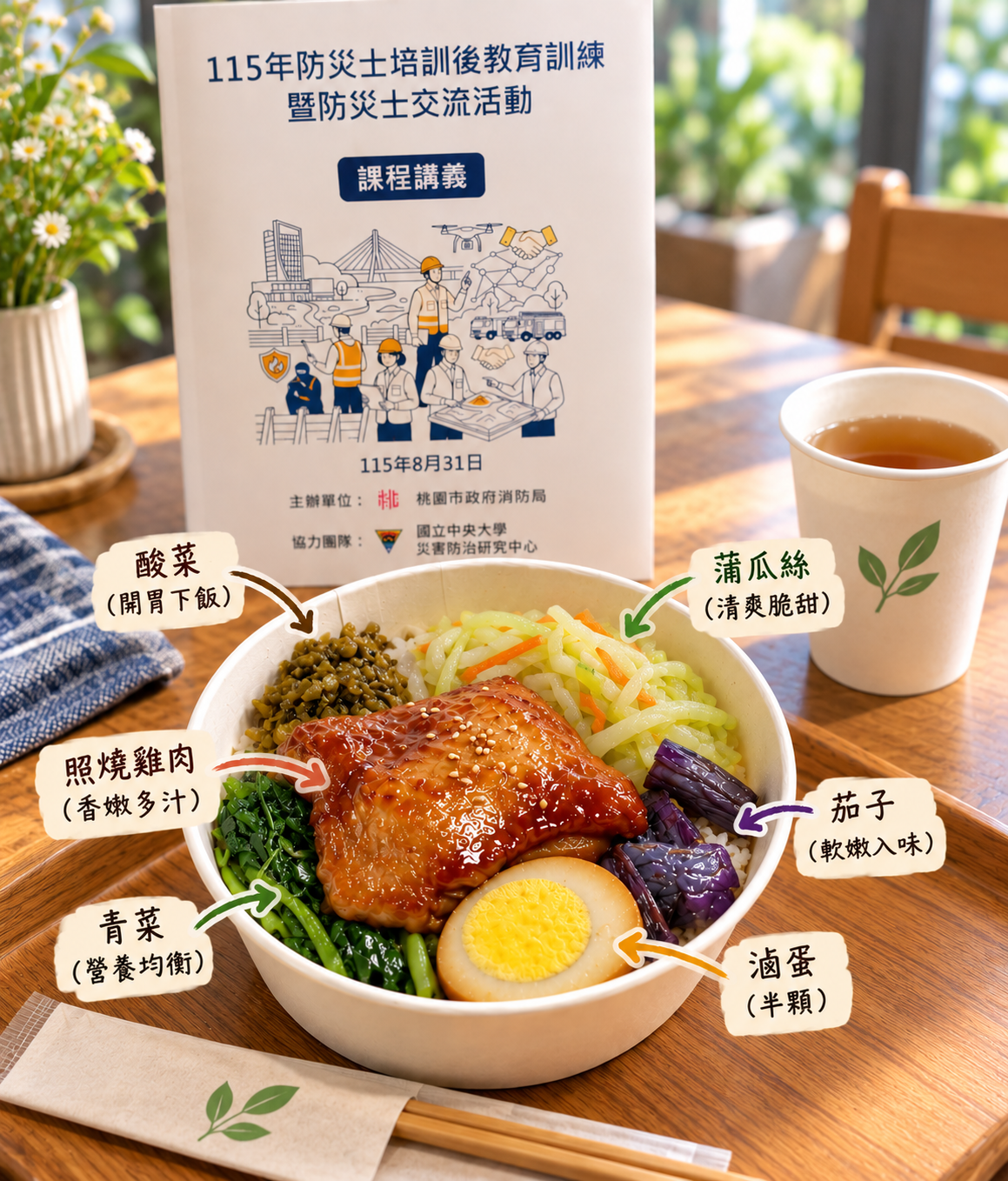
▲ The lunchbox I received after the course later became a conversation starter with my Japanese friend.
For someone with a small appetite like me, it was really filling.
The selection was quite nice, too: half a braised egg, teriyaki chicken, eggplant, shredded bottle gourd, and pickled mustard greens.
Later, during an online language exchange with my Japanese friend, we started talking about this lunchbox.
I was only going to tell my friend what I had eaten that day. Somehow, that little portion of pickled greens took us all the way to pig blood soup, pig blood cake, and even duck blood in spicy hot pot.
It Started with Pickled Mustard Greens
Pickled mustard greens, or suan cai, are a traditional preserved food that goes wonderfully with rice.
They are generally made by pickling mustard greens with salt, and you can cook them in many ways, from stir-fries to soups. In Taiwanese cooking, they are often a supporting ingredient, yet they can make a whole bowl of rice or a pot of soup much more flavorful.
As we talked, we noticed that Taiwanese suan cai looks quite similar to Japanese takana-zuke. Both are made by pickling mustard greens, although the varieties used, the pickling methods, and the flavors are not exactly the same.
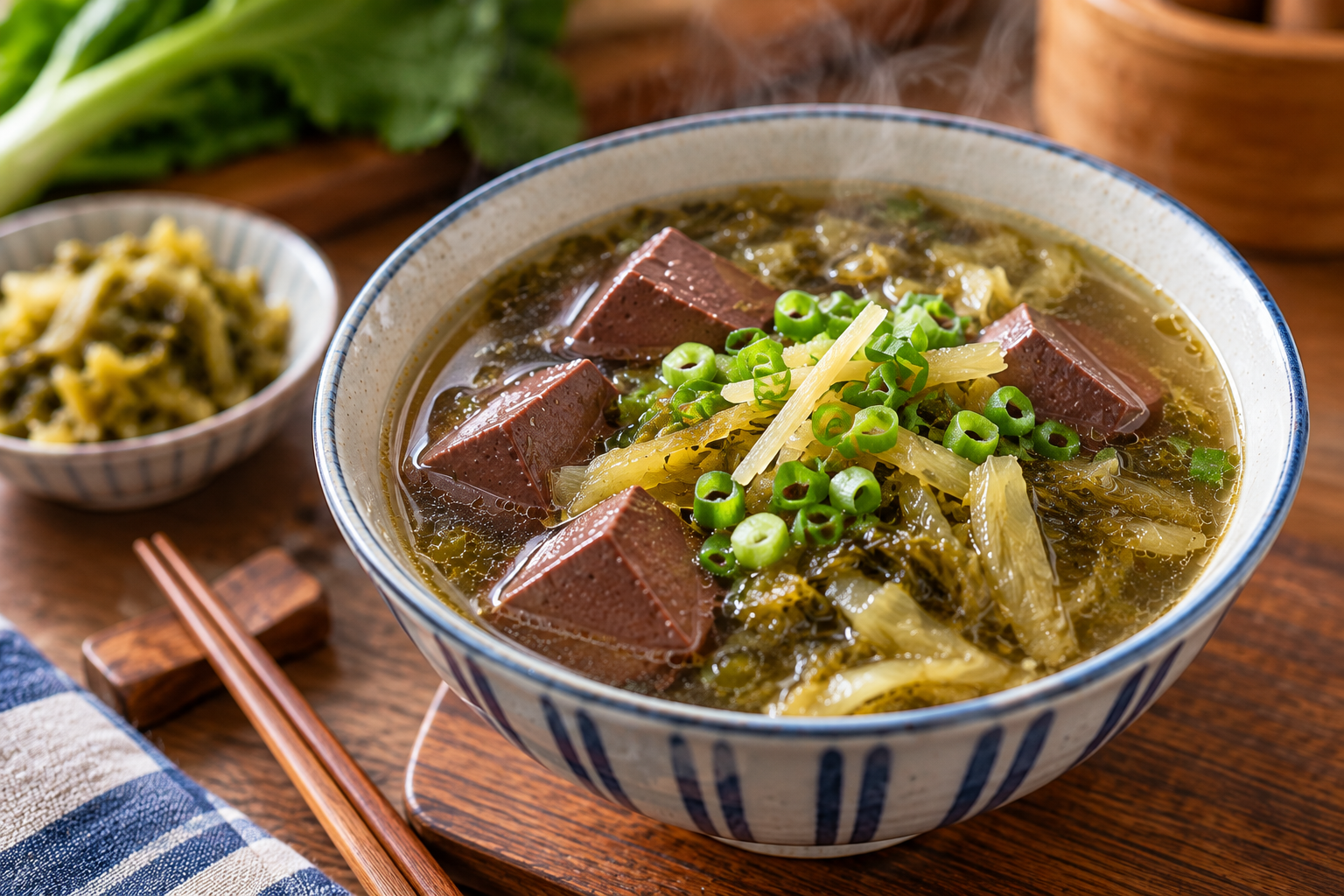
Whenever I see suan cai, another familiar combination comes to mind: pig blood soup with pickled mustard greens.
Please don’t let the words “pig blood” scare you just yet.
It is not a bowl of red liquid, and nobody is drinking the blood straight. Just imagining that does sound rather frightening.
Pig blood is usually processed and allowed to set into a solid ingredient that can be cut up for cooking. The pieces commonly served in soup are soft and silky, and they readily soak up the broth.
Blood Can Be Made into a “Cake,” Too?
That brings us to another very Taiwanese snack: pig blood cake, or zhu xie gao.
It may have “pig blood” in its name, but it tastes and feels very different from the cubes in suan cai soup.
Pig blood cake is made by mixing pig blood with glutinous rice, giving it a firmer, chewier texture.
At Taiwanese night markets and snack stalls, a common way to serve it is steamed, dipped in sauce, and coated with peanut powder and cilantro.
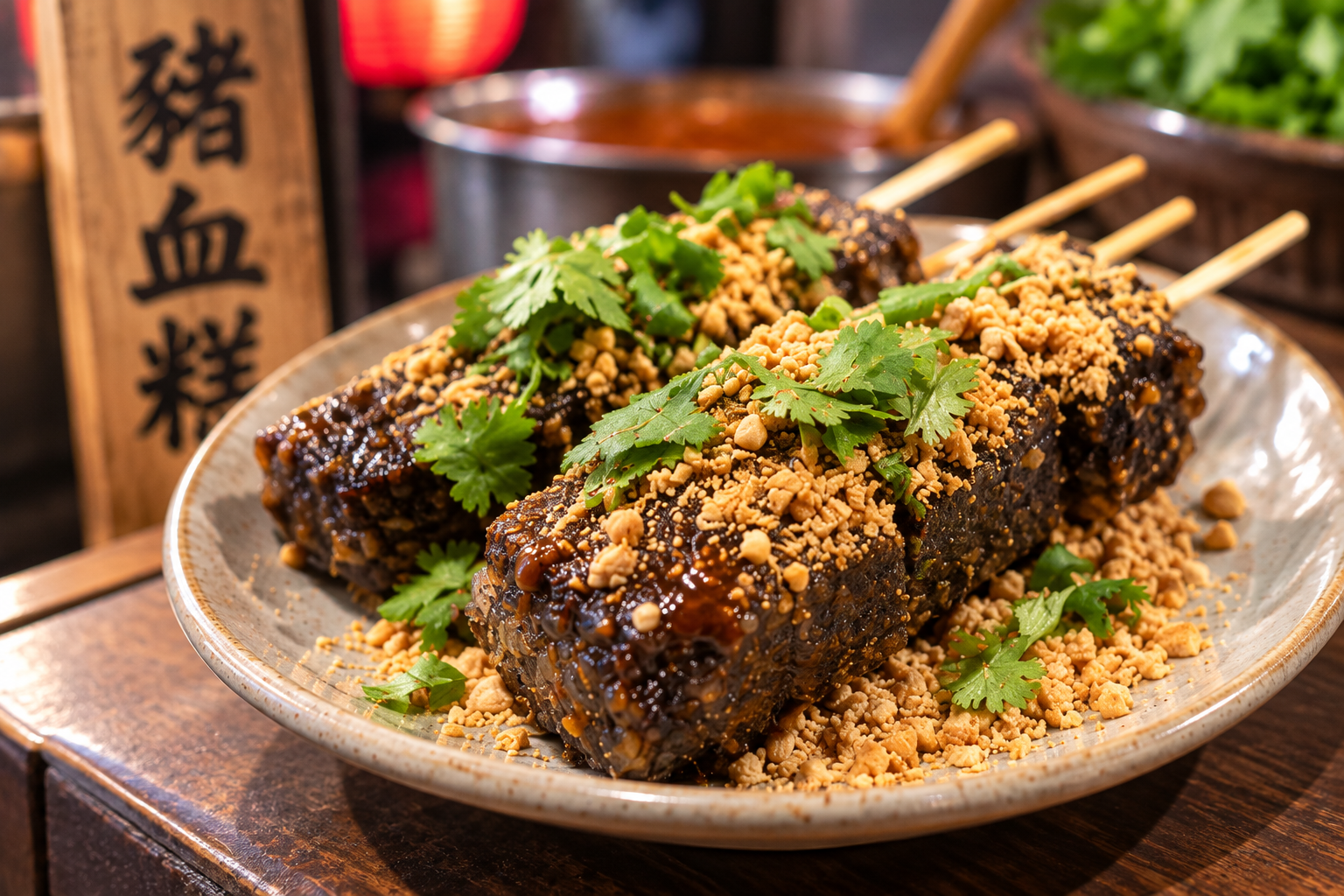
▲ Pig blood cake served with sauce, peanut powder, and cilantro is a familiar Taiwanese snack.
If you have never heard of pig blood cake before, the name alone might make you hesitate. But when you actually taste it, what stands out most is the springy glutinous rice, the aroma of peanuts, and the sweet and savory sauce.
It can also be deep-fried and served with sauce. Each version has its fans.
In Spicy Hot Pot, It’s Duck Blood
Another similar ingredient is duck blood.
In Taiwan, it often appears in mala hot pot, with its spicy, numbing broth.
For many people, the thought of mala hot pot immediately brings duck blood and stinky tofu to mind. The two are something of a signature pairing in this kind of hot pot.
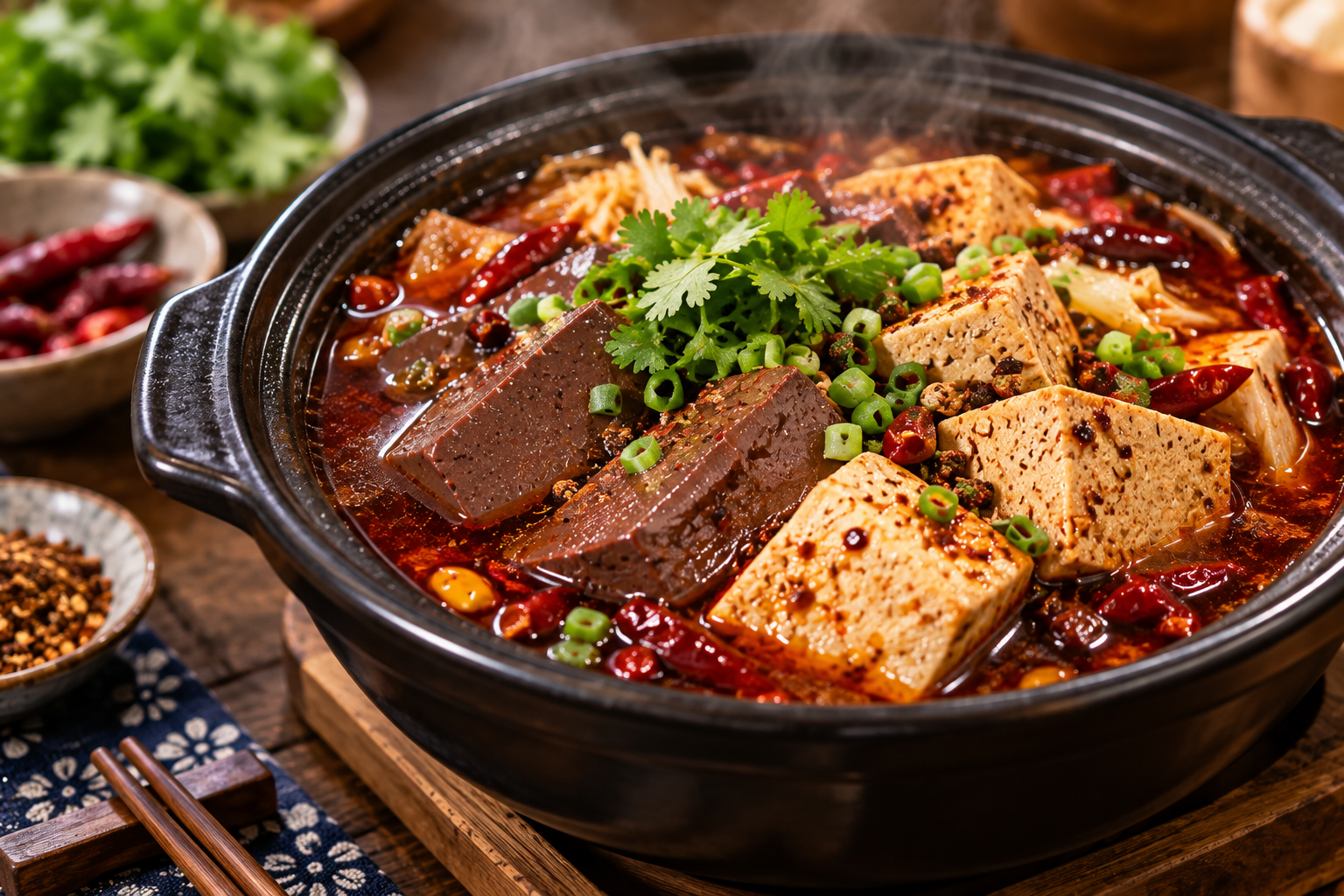
▲ Duck blood and stinky tofu are a characteristic pairing in Taiwanese mala hot pot.
Although pig blood and duck blood are both blood-based ingredients, their textures and the ways they are cooked differ. Pig blood is common in soups and snacks, while duck blood often appears in dishes such as mala hot pot.
Of course, these ingredients are not for everyone.
Some people simply dislike their smell or texture. Others avoid foods containing blood because of their religion or dietary habits.
When cooking, blanching or adding ginger can help reduce the smell. For example, pig blood soup with pickled mustard greens can be made with stock, suan cai, and thinly sliced ginger.
The salty, savory flavor and gentle sourness of the greens balance the taste of the pig blood nicely.
So although it may look very simple, this soup is a traditional dish with a distinctly Taiwanese flavor.
If you get the chance to visit Taiwan, perhaps you could give it a try.
Chinese Vocabulary
| Chinese | Pinyin | English |
|---|---|---|
| 便當 | biàn dāng | lunchbox; boxed meal |
| 芥菜 | jiè cài | mustard greens |
| 高菜漬 | gāo cài zì | Japanese pickled mustard greens (takana-zuke) |
| 酸菜 | suān cài | pickled mustard greens |
| 醃製 | yān zhì | to pickle; to preserve |
| 豬血 | zhū xiě | pig blood |
| 豬血糕 | zhū xiě gāo | pig blood cake |
| 鴨血 | yā xiě | duck blood |
| 糯米 | nuò mǐ | glutinous rice |
| 花生粉 | huā shēng fěn | peanut powder |
| 香菜 | xiāng cài | cilantro; coriander |
| 麻辣鍋 | má là guō | spicy, numbing hot pot |
| 臭豆腐 | chòu dòu fu | stinky tofu |
| 腥味 | xīng wèi | fishy or gamey smell |
| 汆燙 | cuān tàng | to blanch |
| 去腥 | qù xīng | to remove a fishy or gamey smell |
| 高湯 | gāo tāng | stock; broth |
Things You Can Say in Chinese
這是課程結束後拿到的便當。
Zhè shì kè chéng jié shù hòu ná dào de biàn dāng.
This is the lunchbox I received after the course.
台灣的酸菜和日本的高菜漬有點像。
Tái wān de suān cài hé Rì běn de gāo cài zì yǒu diǎn xiàng.
Taiwanese pickled mustard greens are a little like Japanese takana-zuke.
酸菜是用芥菜醃製的。
Suān cài shì yòng jiè cài yān zhì de.
Suan cai is made by pickling mustard greens.
酸菜很下飯。
Suān cài hěn xià fàn.
Pickled mustard greens go really well with rice.
台灣有一道料理叫酸菜豬血湯。
Tái wān yǒu yí dào liào lǐ jiào suān cài zhū xiě tāng.
There is a Taiwanese dish called pig blood soup with pickled mustard greens.
豬血不是液體,而是凝固後切成塊狀來料理。
Zhū xiě bú shì yè tǐ, ér shì níng gù hòu qiē chéng kuài zhuàng lái liào lǐ.
The pig blood is not cooked as a liquid; it is allowed to set and then cut into pieces for cooking.
豬血糕是用豬血和糯米做成的。
Zhū xiě gāo shì yòng zhū xiě hé nuò mǐ zuò chéng de.
Pig blood cake is made with pig blood and glutinous rice.
常常會加花生粉和香菜一起吃。
Cháng cháng huì jiā huā shēng fěn hé xiāng cài yì qǐ chī.
It is often eaten with peanut powder and cilantro.
鴨血常出現在台灣的麻辣鍋裡。
Yā xiě cháng chū xiàn zài Tái wān de má là guō lǐ.
Duck blood often appears in Taiwanese mala hot pot.
有些人不喜歡血製品的腥味。
Yǒu xiē rén bù xǐ huān xiě zhì pǐn de xīng wèi.
Some people dislike the smell of foods made with blood.
如果有機會來台灣,可以試試看。
Rú guǒ yǒu jī huì lái Tái wān, kě yǐ shì shì kàn.
If you have the chance to visit Taiwan, you can give it a try.